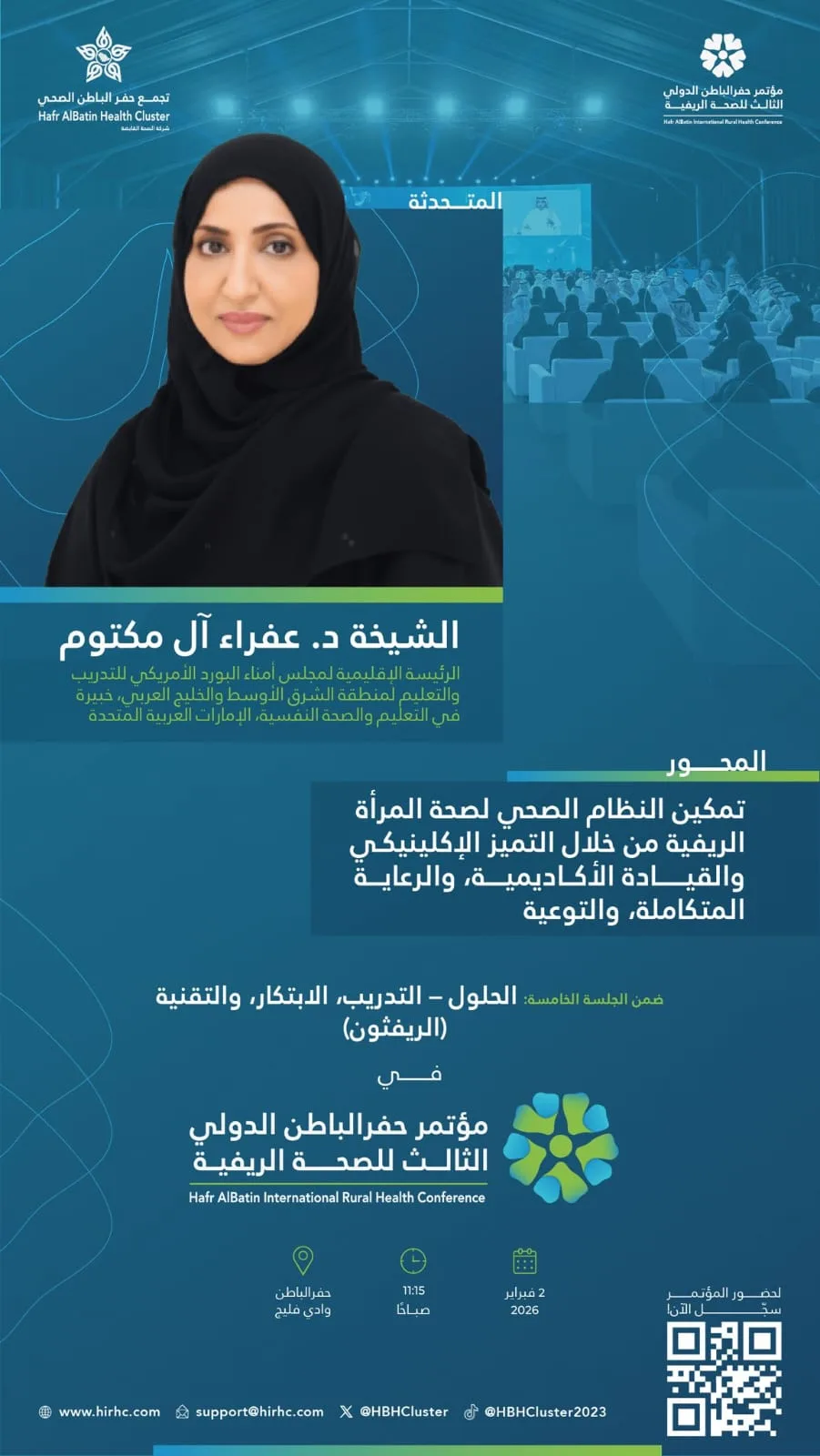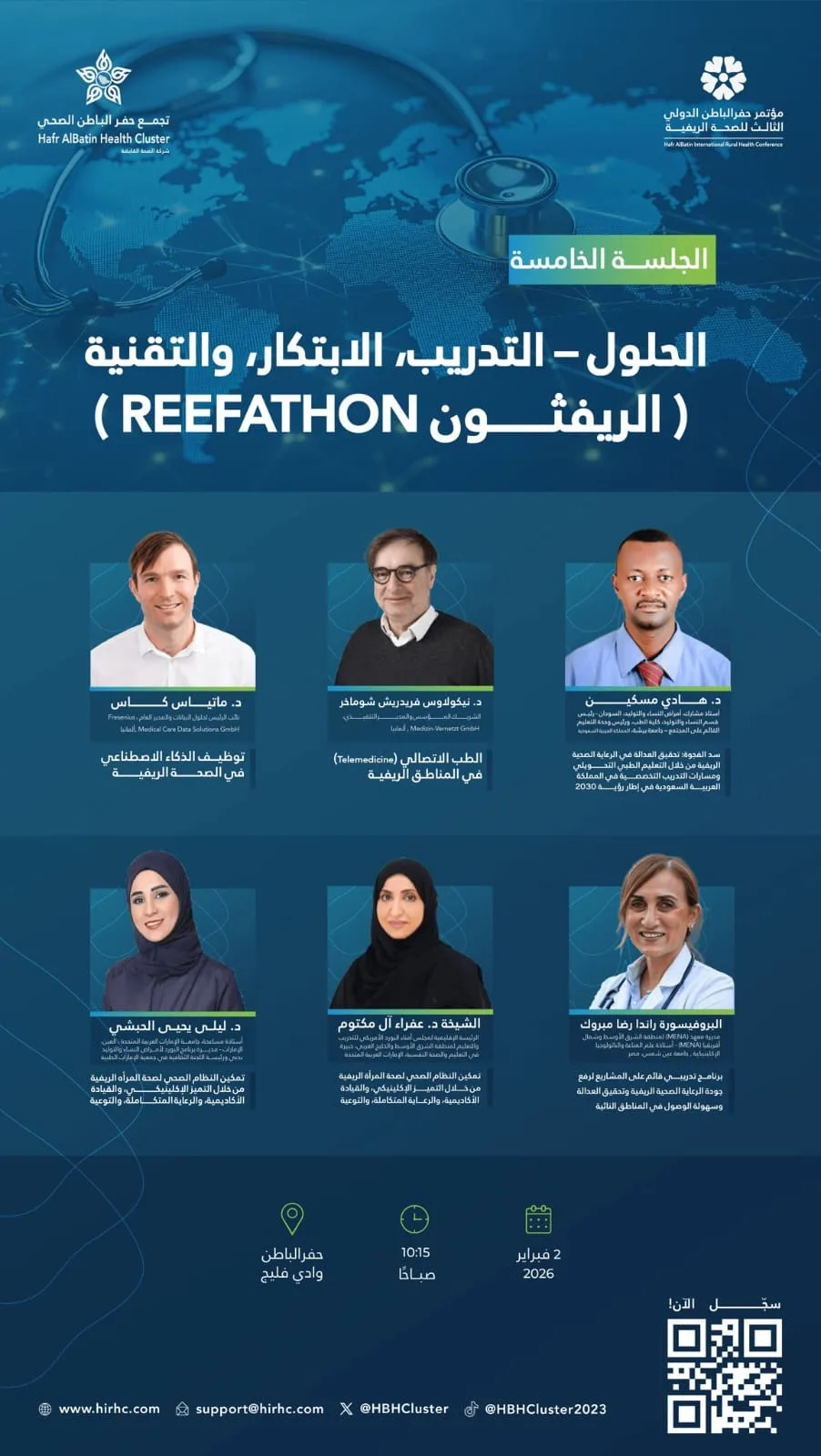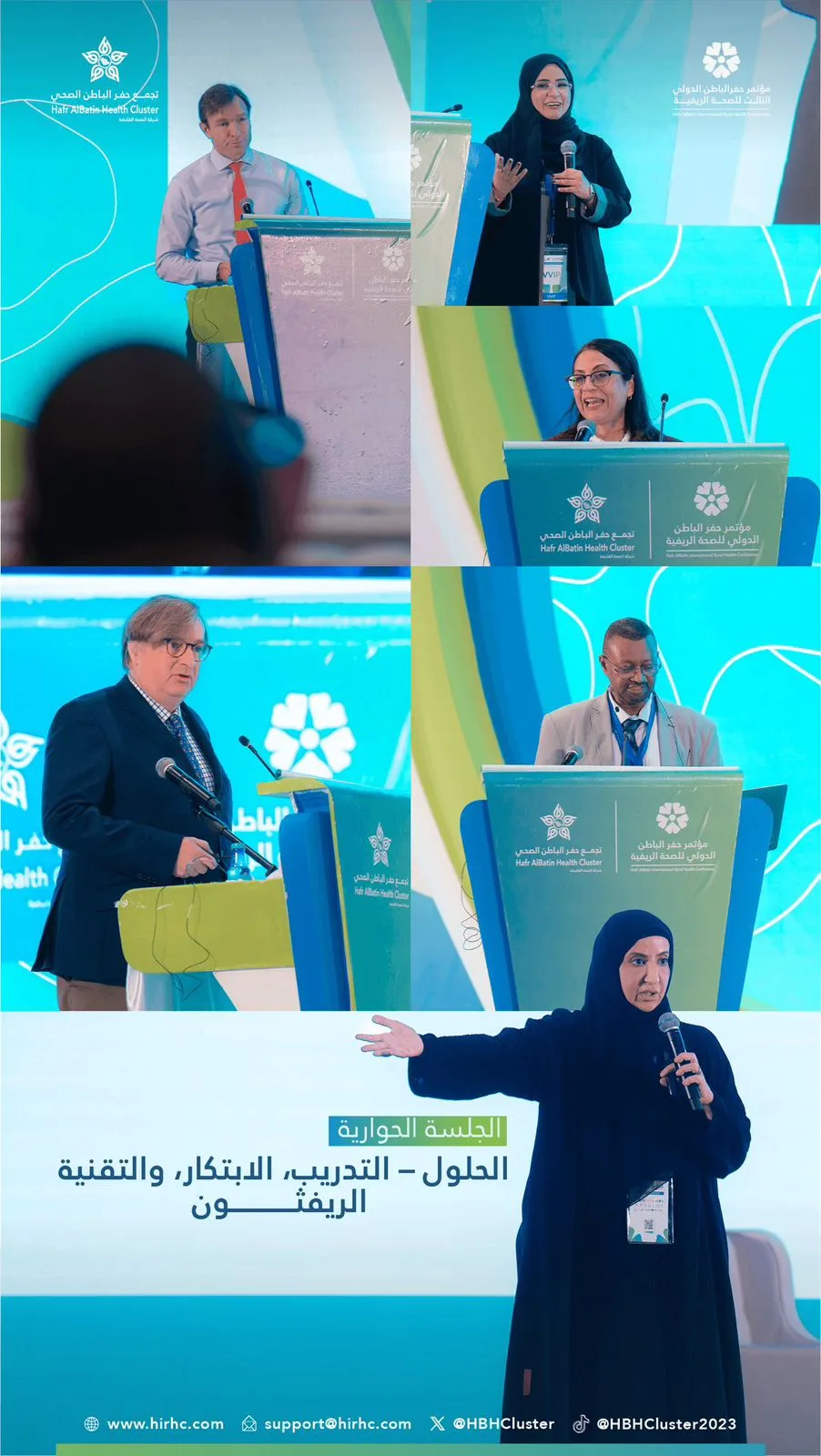
Dr. Afra bint Hasher Al Maktoum, Member of the Board of Trustees of US Meta Arees International University and Regional President of the American Academic Board for Training and Education, presented a working paper on mental health at the Third Global Conference on Rural Health held in Hafar Al-Batin, Saudi Arabia. Her participation took place during the fifth session of the conference, which was broadly titled: Solutions – Training, Innovation, and Technology (REEFATHON).
The working paper addressed several key themes, emphasizing that women’s health is a comprehensive societal and developmental issue that affects family stability, quality of life, and the future of sustainable development across the Gulf region. Dr. Afra called for the integration of health education for girls across all stages of education, with a particular focus on adolescence, delivered through scientifically sound approaches that preserve privacy and promote psychological well-being. She stressed that health education represents a long-term investment in sustainable development due to its positive impact on family stability.
Additionally, Dr. Afra highlighted the importance of establishing clear frameworks for the use of digital health as a supportive tool for health awareness rather than a substitute for it. She noted that the effectiveness of health technologies and platforms should be measured by their ability to enhance health awareness, respect cultural privacy, and ensure accessibility.
She further emphasized the need to redefine health innovation—including technological initiatives and reefathons—so that it remains centered on people and their real needs.
Dr. Afra concluded by underscoring the necessity of adopting an integrated Gulf vision for women’s health that begins at the school level, is supported by the family, reinforced by responsible media, and leverages technology in alignment with cultural values and privacy. She also called for strengthened partnerships among the health, education, media, and technology sectors to ensure coordinated efforts and avoid fragmented responsibility for women’s health, affirming that women’s health is a collective responsibility requiring long-term policies and sustainable programs that extend beyond seasonal campaigns.